
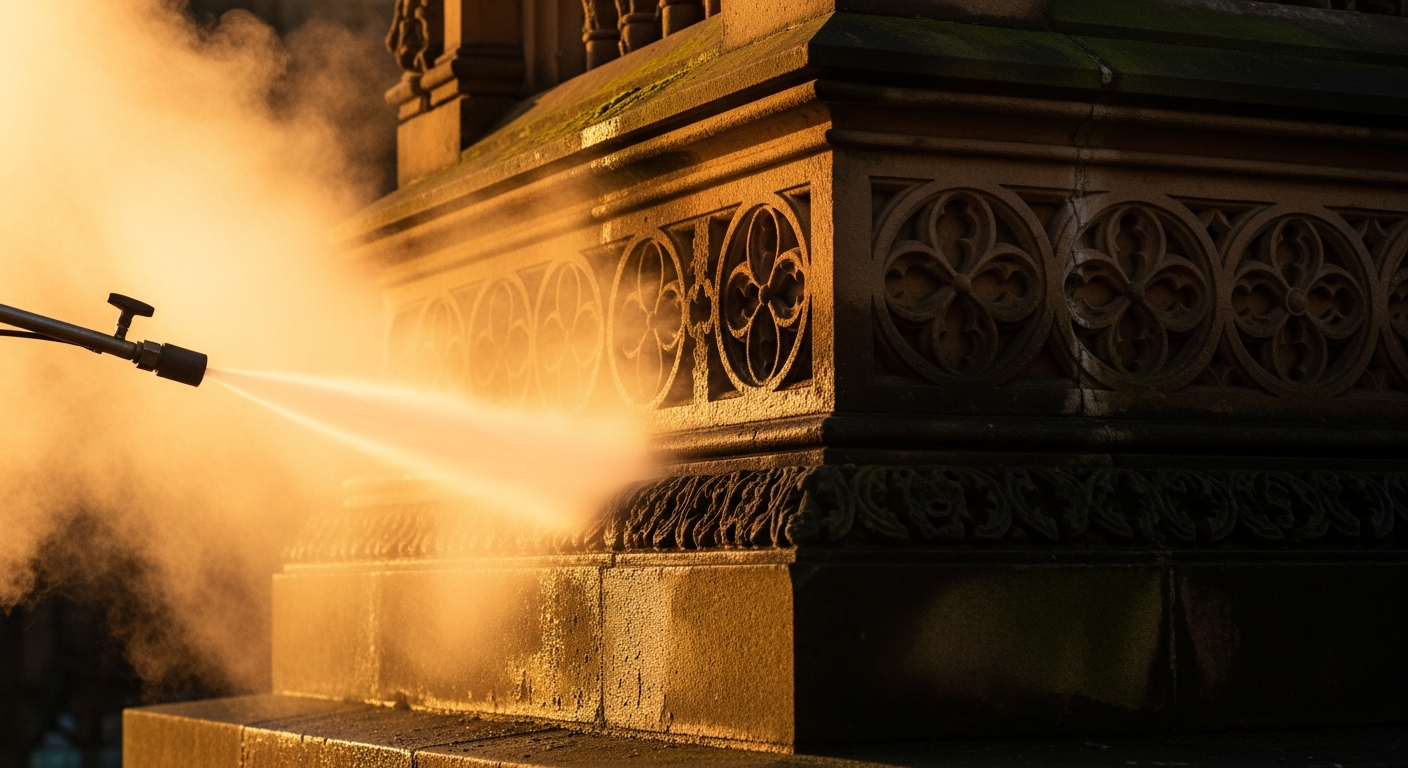
Saturated Dry Steam & Vapor Abrasive Blasting
The gentlest — and most effective — method for fragile historical architecture and heritage preservation. Our specialized generators produce 150°C (300°F) superheated saturated dry steam at extremely low pressures, instantly eliminating oils, soot, and deep-rooted biological growth without the pitting and freeze-thaw damage caused by high-pressure washing.
Free Estimates
We'll assess your project and give you a clear answer on method, timing, and price. No obligation.
Highway 22 Corridor · Alberta Foothills
Why high-pressure washing damages heritage stone
High-pressure washing forces large volumes of liquid water deep into porous sandstone, limestone, and brick. This causes irreversible pitting of fragile surfaces and, in Alberta's climate, drives salt efflorescence and severe freeze-thaw spalling as trapped moisture freezes and expands. Our saturated dry steam operates at extremely low pressure — the intense thermal shock does the work, not brute-force water volume.
One system. Two levels of power.
We deploy saturated dry steam in two configurations — standalone thermal purification for everyday heritage surfaces, and vapor abrasive blasting for the most stubborn industrial contaminants.
Standalone Steam Purification
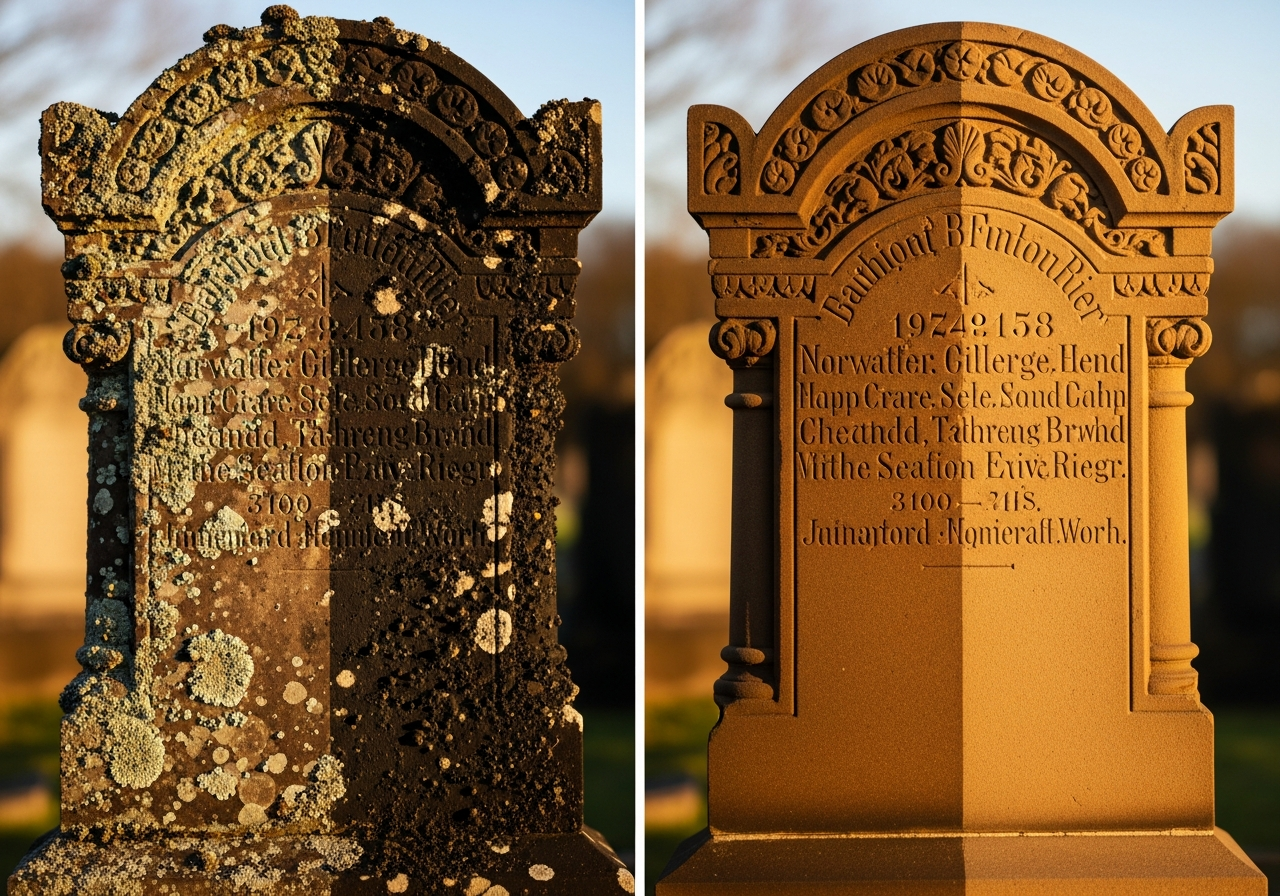
Our generators produce 150°C (300°F) superheated saturated dry steam at extremely low operating pressure. On its own, the intense thermal shock of this dry steam instantly melts away heavy oils, soot, and deep-rooted biological spores — including moss, lichen, and algae that have embedded themselves in porous heritage stone.
Because the steam contains nearly zero liquid moisture, the stone substrate stays relatively dry throughout treatment. This prevents the salt efflorescence and severe freeze-thaw damage that traditional power washing inflicts on fragile sandstone markers, limestone facades, and heritage brick.
Vapor Abrasive Blasting
For exceptionally stubborn paints, industrial coatings, or heavy carbon crusts that steam alone cannot lift, we introduce a controlled, eco-friendly micro-abrasive directly into the steam stream. The moisture cushions the abrasive media, providing a gentle "sweeping" action that lifts the toughest grime.
Unlike traditional sandblasting — which delivers destructive impact and generates hazardous silica dust clouds — vapor abrasive blasting is non-destructive and dust-free. The steam suppresses all airborne particles at the point of contact, making it safe for occupied heritage sites and urban environments.
Non-Destructive at Low Pressure
150°C thermal shock does the cleaning — not brute-force pressure. Fragile sandstone markers and century-old facades are protected.
Near-Zero Liquid Moisture
Stone stays relatively dry throughout. No saturated substrate means no salt efflorescence, no freeze-thaw spalling.
Dust-Free & Chemical-Free
No silica dust, no hazardous chemical runoff. Steam suppresses all airborne particles at the point of contact.
Applications
- Fragile heritage stone and historical architecture — no pitting, no water damage
- Pioneer cemetery and monument cleaning — biological spore elimination
- Stubborn industrial coatings, heavy carbon crusts, and bonded paints
- Grease and oil removal from machinery and equipment
- Biological growth removal — moss, lichen, and algae
- Post-cleaning stone consolidation and breathable sealing
- Heritage brick facade restoration
- Cemetery and monument preservation treatments
Compatible Substrates
Steam vs. pressure washing vs. sandblasting
Pressure washing forces water volume into porous stone — causing pitting and freeze-thaw damage. Sandblasting uses destructive impact and generates hazardous silica dust. Steam cleaning uses thermal shock at low pressure — eliminating contaminants without physical impact, water saturation, or toxic media. Ask us which method is right for your surface.
Consolidation & Breathable Sealing
True heritage restoration does not end when the surface is clean. Decades of exposure to Alberta's harsh freeze-thaw cycles and environmental pollutants can leave historical stone weakened, porous, and vulnerable to future decay. We offer specialized, conservation-grade treatments to extend the lifespan of your monuments and masonry.
Historical Stone Consolidation
For sandstone, limestone, or marble that has begun "sugaring" — flaking or crumbling at the surface — we apply advanced, penetrating stone consolidants. Rather than coating the surface, these specialized treatments dive deep into the substrate to chemically re-bond the stone's molecular structure.
The result is a restoration of vital structural strength to weakened monuments without altering their historic appearance, original patina, or craftsman tool marks. Conservation-grade materials that meet heritage preservation standards.
Breathable Impregnating Sealers
We strictly avoid cheap, film-forming sealers that trap moisture inside porous stone — leading to "case hardening" and catastrophic spalling when trapped water freezes and expands in Alberta's climate. These products cause more damage than they prevent.
Instead, we utilize premium, 100% breathable penetrating sealers. These water-based treatments create an invisible barrier deep within the stone's pores — providing maximum protection against water intrusion, oil, and corrosive de-icing salts while allowing the historical masonry to naturally breathe and release internal moisture.